
Top 10 Signs Your Roof Needs Repair: Don’t Ignore These Warning Signals

Feb 7, 2024 | Flashing, Gutters, News

Your roof is your home's first line of defense against the elements, so it's crucial to keep an eye out for signs of damage.

$

Get a Free Quote

After a strong windstorm or heavy rainfall, some homeowners discover water stains, missing shingles, or active roof leaks. Storm damage is one of the most common causes of roofing problems, and addressing it quickly can prevent small issues from turning into major structural repairs.

If your roof begins leaking after a storm, taking the right steps early can protect your home and simplify the repair process.

How Storms Damage Roofs

Storms can affect roofing systems in several ways, often causing damage that is not immediately visible from the ground.

High Winds

Strong winds can lift shingles, break adhesive seals, or tear shingles completely off the roof. Once shingles are loosened, water can enter beneath them during the next rainfall.

Heavy Rain

Prolonged rain can expose weak points in the roofing system such as worn flashing, aging sealants, or deteriorated underlayment.

Flying Debris

Branches or airborne debris can strike the roof surface, damaging shingles or flashing components.

Clogged Drainage

Storm debris can block gutters and downspouts, causing water to back up under roof edges.

Signs a Roof Replacement May Be Necessary

Some roofing problems indicate that repairs will only provide a temporary fix.

Extensive Shingle Damage

When large sections of shingles are curling, cracking, or missing granules, the protective surface of the roof may be failing.

Multiple Leaks

If leaks are occurring in several areas, it often means the roofing system is deteriorating across the entire structure.

Sagging Roof Areas

A sagging roofline may indicate structural problems or severely deteriorated roof decking.

Aging Roof Materials

Most asphalt shingle roofs last approximately 20–25 years. If the roof is approaching the end of its lifespan, replacement may be more cost-effective than repeated repairs.

Signs Your Roof May Have Storm Damage

Even if leaks have not yet appeared, there may be warning signs that your roof was affected by the storm.

Look for:

  • Missing or displaced shingles

  • Shingle fragments on the ground

  • Granules collecting in gutters or downspouts

  • Bent or damaged flashing around vents and chimneys

  • Water stains appearing on ceilings or walls

  • Damp insulation or wood in the attic

Because some storm damage is subtle, problems may not become visible until the next period of heavy rain.

What to Do If Your Roof Leaks After a Storm

1. Protect the Interior

Place containers under active drips and move furniture or valuables away from the affected area.

2. Document the Damage

Take photographs of interior leaks, ceiling stains, and any visible exterior damage. This documentation can be helpful if you file an insurance claim.

3. Avoid Climbing Onto the Roof

Storm-damaged roofs can be slippery and unstable. Leave inspections to professionals who have proper safety equipment.

4. Contact a Roofing Professional

A roofing contractor can assess the damage, locate the source of the leak, and recommend appropriate repairs.

Why Prompt Inspection Is Important

Storm-related roof damage often worsens if it is not repaired quickly. Water entering the roof system can lead to:

  • Rotting roof decking

  • Damaged insulation

  • Mold growth in attic spaces

  • Interior ceiling and wall damage

Early repairs are typically faster and less expensive than restoring widespread water damage.

If your roof is leaking after a storm, contact Aces Roofing for a professional inspection and timely repairs to protect your home.

FAQ

Can a roof leak start days after a storm?

Yes. Damage from wind or debris may not leak immediately but can allow water in during the next rainfall.

Should I call insurance before a roofer?

A professional roof inspection can help identify the cause of the damage and provide documentation that may support an insurance claim.

Is storm damage always visible from the ground?

No. Many roofing issues occur in areas that are difficult to see without a proper roof inspection.

Here are the top 10 warning signals that your roof may need repair:

Don't overlook the importance of checking for missing or damaged shingles on your roof. Cracked, curled, or completely missing shingles can expose your roof to potential water damage, so it's crucial to address this issue promptly.
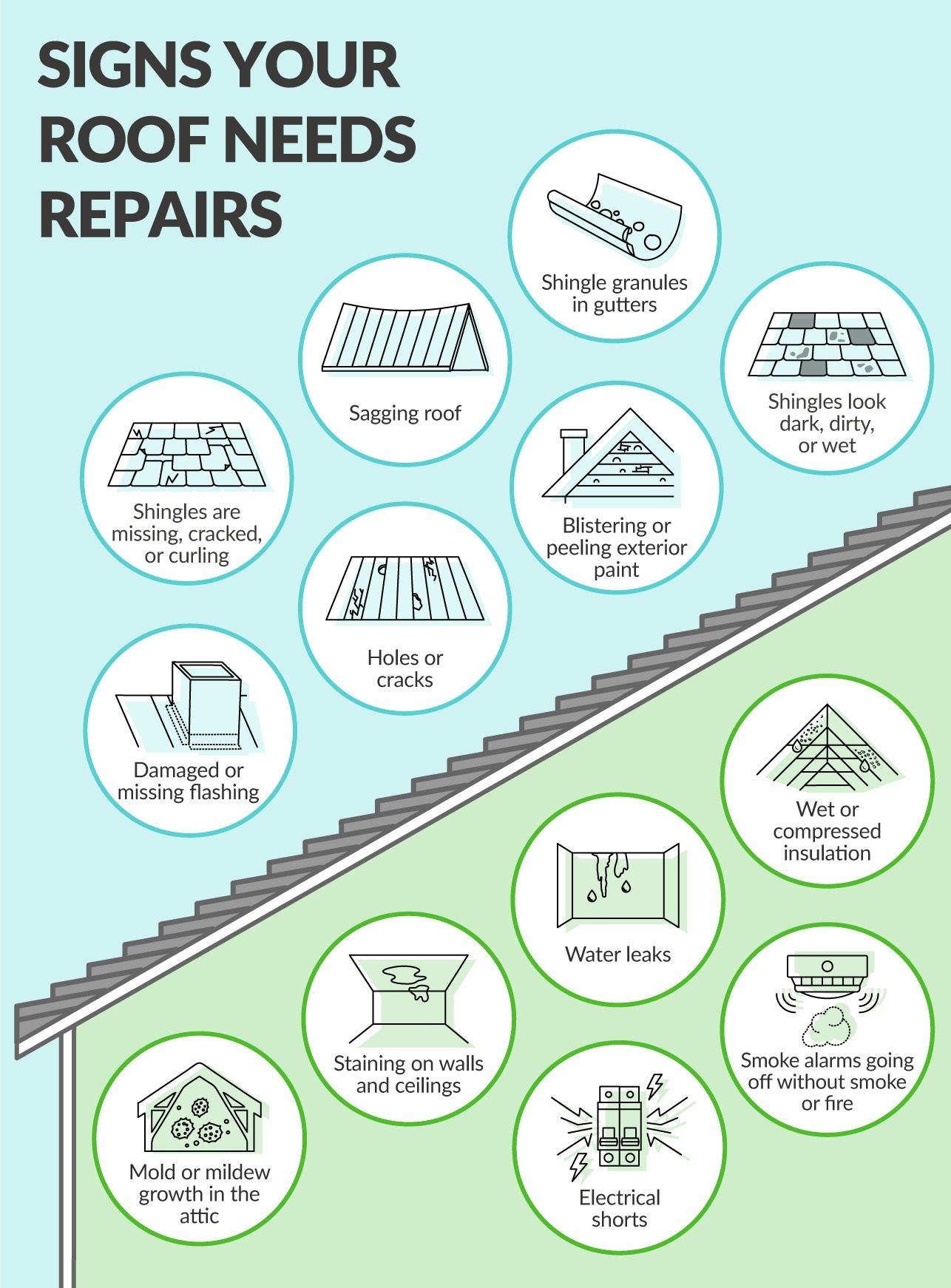
If you notice any sagging areas on your roof, it could be an indication of structural problems caused by water damage or insufficient support. Taking action to fix these issues promptly is essential.

Keep an eye out for water stains on your ceiling as they are clear signs of a roof leak. Ignoring these stains can lead to further damage, so immediate attention is necessary to prevent any issues from worsening.

Excessive granules in your gutters can be a sign of deteriorating shingles. If you observe a significant amount of granules in your gutters, it's essential to consider replacing the shingles to maintain a robust and secure roof.

Algae or moss growth on your roof can imply excessive moisture, which can cause deterioration and potential leaks. To avoid any further damage, it's crucial to address this issue promptly.

The flashing on your roof serves as a seal for the seams and edges. Any damage to the flashing can leave your roof susceptible to leaks, so it's essential to repair it as soon as possible.

Cracks in your chimney or vents can allow water to seep into your home, resulting in water damage and mold growth. To prevent any severe consequences, it's crucial to address these cracks promptly.

If you notice peeling paint on the underside of your roof overhangs, it might indicate a moisture buildup issue that can lead to wood rot and decay. Taking immediate steps to address this problem is crucial.

A poorly insulated or ventilated roof can significantly impact your energy bills. With an inefficient roof, your HVAC system may have to work harder to maintain a comfortable temperature, causing your energy bills to skyrocket. It's crucial to consider improving insulation or ventilation to avoid such increased energy costs.

As your roof nears the end of its expected lifespan, it's important to consider timely replacement or repairs. Addressing any potential issues before they escalate can help you avoid unexpected problems in the future.

Don't ignore these warning signals—the sooner you address roof problems, the more time, money, and headaches you can save in the long run.

E

Sources

- "10 Warning Signs Your Roof Needs Repair" - [HomeAdvisor](https://www.homeadvisor.com/r/10-warning-signs-your-roof-needs-repair/)

20 years of quality

Aces Roofing services all of Vancouver Island and the Gulf Islands.

Our crews are located in the Comox Valley, making us one of the most responsive roofing companies on the Island.

Related posts

How to Tell if Your Roof Needs Repair or Full Replacement

March 25, 2026

Read More

$

Dripping From the Ceiling During Heavy Rain: What It Means

March 18, 2026

Read More

$

Roof Leaking Around a Vent or Chimney: What’s Causing It?

March 11, 2026

Read More

$